
When the Record Speaks: Why Yayi's Leadership Moment Has Come
Page Views: 39 Dr. Humanbeing Oyede
6
Sep
When the Record Speaks: Why Yayi's Leadership Moment Has Come
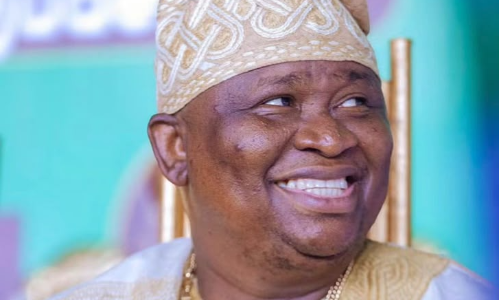
In politics, there comes a point when ambition must give way to evidence. At that point, political arguments can no longer be sustained by slogans, endorsements or the volume of campaign rhetoric; they must be tested against the record, experience and capacity of the person seeking to lead. For Senator Solomon Olamilekan Adeola, popularly known as Yayi, that moment has arrived. The question before Ogun State is no longer whether Yayi is prepared for leadership, his records have answered that question.
For more than two decades, Senator Yayi has been part of Nigeria's political and legislative journey, moving from the Lagos State House of Assembly to the House of Representatives and subsequently to the Senate, where he first represented Lagos West and now represents Ogun West. His current position as Chairman of the Senate Committee on Appropriations places him at the centre of one of the most critical aspects of national governance; the allocation and oversight of public resources. These experiences are not simply titles attached to a political resume; they represent years of exposure to the workings of government, public finance, legislation, oversight and policymaking.
There is often a tendency in our political discourse to measure experience simply by the number of years spent in public office. I do not subscribe to that view. Experience in governance is not merely about longevity; it is about exposure, responsibility, institutional understanding, sound judgement and the ability to make decisions when the stakes are high. By that measure, Yayi's political journey deserves serious consideration.
Before reaching the Senate, he had already served in the Lagos State House of Assembly and the House of Representatives, where he chaired the Public Accounts Committee. He later served as Chairman of the Senate Committee on Finance and subsequently assumed the chairmanship of the Appropriations Committee. These are not ceremonial assignments. They require an understanding of public finance, legislation, oversight and the complicated relationship between government policy and implementation. For anyone aspiring to become the governor of Ogun State, that kind of exposure is significant because the governor sits at the point where policy decisions must eventually be translated into tangible outcomes for the people.
This is where the conversation about Senator Yayi's aspiration to govern Ogun State becomes particularly important. Governorship is not a classroom for learning the basic principles of governance. It is an executive responsibility that demands a leader who understands the system before assuming control of it. Ogun State is too important, too economically strategic and too socially diverse to be governed through trial and error. It is a major industrial and investment destination, with rapidly expanding urban centres, a large and youthful population, significant agricultural potential and growing demands for infrastructure, education, healthcare, security and employment. The next governor will therefore require more than popularity. He will need to understand budgets, institutions, public finance and the relationship between legislation, policy and implementation. He will need the political maturity to engage the Federal Government while defending the interests of Ogun State, and he will need the capacity to bring together the Aworis, Yewas, Egbas, Ijebus, Remos and other communities across the state under a vision that rises above sectional considerations. Above all, he must understand that government is ultimately about people.
This is why Senator Yayi's background and experience deserve serious attention. His professional training as a chartered accountant, and as a Fellow of the Institute of Chartered Accountants of Nigeria, gives him a strong grounding in financial management, while his years in the legislature have exposed him to the institutional and policy dimensions of governance. His political career has also required him to operate across constituencies, political structures and different levels of government. These experiences collectively provide a foundation that is relevant to the responsibilities of executive office.
There is, however, another dimension of Senator Yayi's journey that should not be overlooked; his political evolution. He did not emerge overnight as a governorship aspirant. His journey has been gradual and, at various points, challenging. He has contested elections, won elections, experienced political setbacks and continued to move forward. He has built alliances, navigated political transitions and remained relevant through changing political circumstances. All of these matter because leadership is often tested most severely when circumstances are difficult. A politician who has only experienced favourable political weather may not necessarily have been tested, but a politician who has weathered political storms, adapted to changing circumstances and continued to advance demonstrates something valuable that money can't buy, and that is tenacity.
Democracy does not require citizens to suspend their judgement. It requires citizens to examine, interrogate and assess the available evidence before making informed choices. And when Senator Yayi's journey is examined from that perspective, one fact becomes difficult to dispute and it is that Senator Yayi is not approaching leadership from the outside; he is approaching it from within the experience of governance. There is a fundamental difference between a politician who simply wants to become governor and one whose career has progressively prepared him for the responsibilities of the office. The former possesses ambition; the latter possesses ambition backed by experience.
As we approach the 2027 political conversation in Ogun State, the question should not simply be who is popular or who has the loudest political machinery, we should be asking what kind of leadership Ogun State needs at this stage of its development. Do we want leadership driven primarily by political grandstanding, or leadership supported by demonstrated institutional experience? Do we want a governor who will spend the early part of his administration learning the complicated architecture of government, or one who already understands how budgets are constructed, how institutions function and how public policy moves from conception to implementation? These are legitimate questions, and they deserve answers beyond political sentiment and partisan emotions.
President Bola Ahmed Tinubu's recent commendation of Senator Adeola is also noteworthy in this regard. In congratulating Senator Yayi on his birthday, the President acknowledged his years of service to Lagos, Ogun and Nigeria, as well as his role in national budget management and his contribution to the Renewed Hope agenda. Such recognition, of course, should not replace the independent judgement of the people. Ultimately, the people of Ogun State will decide who should govern them. But that decision should be made with a clear understanding of the candidates' records, experiences, capacities and visions for the state.
For me, this is why the framing of the 2027 conversation around Senator Yayi should change. We should stop asking whether he is ready because, the legislative experience is there, the committee responsibilities are there, the electoral victories are there, the institutional exposure is there, the professional background is there. What remains is the opportunity to translate that accumulated experience into executive leadership. On the evidence of his journey so far, Senator Solomon Olamilekan Adeola has made a compelling case that he is not merely seeking leadership; he has been preparing for it for years.
Today, therefore, the question is no longer whether Senator Yayi is prepared for leadership, his records have answered that question. The question before Ogun State is whether the state is ready to put that experience to work.